THANK YOU FOR SUBSCRIBING

Auto Tech Outlook Weekly Brief
Be first to read the latest tech news, Industry Leader's Insights, and CIO interviews of medium and large enterprises exclusively from Auto Tech Outlook
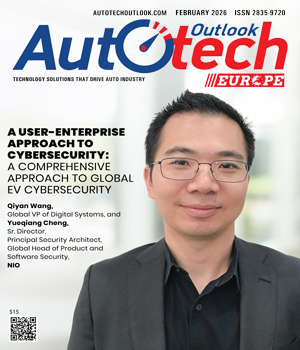
In 2015, a WIRED reporter unraveled the tale of a life-threatening hack on a connected car. Although electric and connected vehicles have become more widely adopted, security concerns exist. Lately, there have been news stories of hacking, causing apprehension to current EV owners and unease for potential drivers. In 2020, researchers from the Southwest Research Institute in Texas successfully hacked North America's most popular charging system. Cyber vulnerabilities were found in six home EV chargers and a large public charging network. As electric cars populate more cities, the need for more charging stations has emerged. However, this brings vulnerabilities to hacking and security concerns, as charging stations are potential targets because they are connected to the internet and communicate with cars.As a pioneer and leading manufacturer of premium smart electric vehicles, we have listed our users' concerns and implemented infrastructure to reduce security risks in the vehicles to protect our cars and users. NIO is the first Chinese-headquartered company and one of the first few in the world to get WP29 R155 certification. The United Nations Economic Commission for Europe (UNECE) World Forum for Harmonization of Vehicle Regulations awards this certification. Protecting The Various Methods of Charging For public charging stations provided by NIO or NIO's partners, once the autoauthentication and payment feature for charging is enabled, a token is signed by the vehicle, and the vehicle identity sends it to the charging station. This data is then sent from the charging station to the charging station cloud to validate the sign and vehicle ID to triple confirm this automatic charging request's authentication. This authentication design is already considered one of the international standard requirements.
Charging an electric vehicle should be a straightforward process. In practice, it rarely is. Unclear pricing, confusing plug options, and unreliable stations force drivers to make decisions without certainty, often at the moment it matters most. miio was created to eliminate that uncertainty and give drivers control. That control starts before a driver ever plugs in. Founded in 2019 in Aveiro, miio is the first platform in Europe to calculate the final price of a charging session in advance, based on the vehicle and the selected station. It continues during the decision-making process, recommending the most cost-effective plug for each session and making charging predictable rather than ad hoc. Community-driven feedback adds another layer of confidence, allowing drivers to verify station reliability through real experiences shared by others. miio now connects drivers to more than 285,000 charging stations across Europe, including Portugal, Spain, France, Germany, Italy, Belgium, and the Netherlands. With a unified experience across thousands of charging stations and operators, and tailored solutions for individual drivers and fleets, miio delivers interoperability without complexity. The result is consistent control at every step of the charging journey. “At miio, customer loyalty is built on trust, simplicity, and transparency,” says Daniela Simões, Co-Founder and CEO..

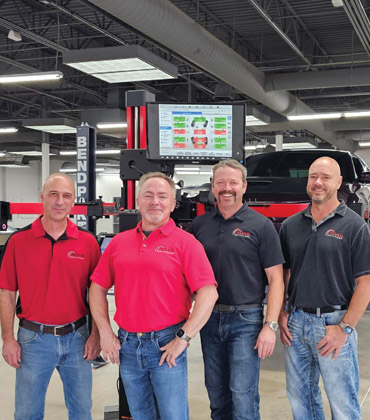
Advanced driver-assistance systems (ADAS), including adaptive cruise control and automatic braking, have become standard in vehicles, playing a vital role in preventing accidents and ensuring road safety. But these complex systems still need to be precisely calibrated to ensure they perform as intended. ADAS Solutions USA, offers a groundbreaking approach to ADAS calibration that prioritizes accuracy and places the customer at the center of its operations. Its mission is to provide top-notch calibration services to collision centers and automotive repair businesses nationwide. As a B2B business, it emphasizes educating stakeholders about the benefits of prioritizing proper calibration methods. “Many stakeholders don’t grasp the importance of proper calibrations or the differences between calibrating various manufacturers. For instance, calibrating an Audi is not the same as calibrating a Ford,” says Frank Phillips, vice president of strategy. It actively bridges this knowledge gap by educating its partners, aiming to empower them with the information needed to better serve their customers. “We want to equip everyone involved in the repair process to understand that just because a dashboard warning light isn’t on, it doesn’t mean a vehicle is safe. The digital impact of a collision can be significant, and thorough research is essential,” states Jerry Cathcart, founder and chief operating officer. Setting Industry Standards There exists a blind spot regarding the intricacies of ADAS calibration and the risks associated with improper repairs. This has led to businesses attempting to perform calibration services from mobile units in environments that do not meet manufacturer standards. These calibrations often occur in parking lots or crowded repair centers, where surrounding objects can interfere with data exchange between the vehicle’s systems and their targets. There is no established standard outlining best practices for collision repairs or windshield changes. OEMs are often reluctant to provide clear, concise guidance. ADAS Solutions USA aims to counter this by providing clear, actionable information that adheres strictly to OEM guidelines, to ensure that every vehicle is repaired according to the highest safety standards. “We must reevaluate what constitutes an acceptable calibration method and the necessary environment for these processes,” states Phillips. Specialized Static Calibration Centers Nationwide to Enhance Precision and Safety
The rise of electric vehicles (EVs) is driving a major shift in infrastructure as cities and regions transition from traditional fuel stations to EV charging stations. In North America, ambitious government goals to cut carbon emissions are accelerating this change. Charging stations are now common at malls, offices, and public spaces. The increase in EV adoption has created a need for expanded grids, upgraded utilities, and new approaches to energy generation and storage. Though the transition is complex, the push toward a cleaner, electrified future is rapidly gaining momentum. At the forefront of this transformation is Miller Electric Company, a long-standing leader in energy and electrical infrastructure services. They focus on renewable energy integration and innovative technology to support businesses in adopting EV solutions, with a specialized public testing facility and full project management. “Our 95 years of expertise and comprehensive in-house capabilities allow us to offer a proven end-to-end approach that accelerates our clients’ electrification journey, all while keeping the future in focus,” says Kerri Stewart, Chief Strategy Officer at Miller Electric. A Scalable Workforce and Extensive Experience Miller Electric Company operates as a family-owned business and an IBEW Union shop with 20 offices across the U.S. They employ over 3,500 skilled professionals—3,000 of whom are licensed electricians. This extensive team of skilled trade professionals gives the company the ability to scale quickly for large projects such as data centers, healthcare facilities, and advanced manufacturing construction. Miller Electric handles projects of all sizes in the EV charging space and focuses on serving industries where energy and technology are essential to delivering exceptional value to critical projects. Miller Electric Company offers full lifecycle project management for EV charging infrastructure, providing support at every stage of the project journey—from consultation to design, engineering, and installation. Miller Electric’s consultative approach helps clients, from property owners to charge point operators with networks across North America, navigate the requirements of EV installations. This early involvement minimizes delays and ensures optimal outcomes. Miller Electric also manages permitting, utility coordination, regulatory compliance, equipment procurement, and ongoing maintenance to ensure the long-term success of the infrastructure they build.


Reshaping the Future of Mobility with Automotive Technology

Jose Jorge Santos, Director of IT Infrastructure and Operations, Salvador Caetano Group

Guiomar Lopez Garcia, Global SAP Director, Adler Pelzer Group

Julien Bertolini, IoT expert, Volvo Group

Stefan Tropper, Director of Digital Solutions and Data Platform, Magna International
Europe's EV market advances through sustainability, innovation, and infrastructure investments.
European automobile marketing evolves through digital engagement, personalised storytelling, omnichannel integration, and sustainability-driven narratives that align brands with modern mobility expectations.
Driving Structural Excellence in Electric Mobility Technology
In this context, miio, recognized as the Top Electric Vehicle Mobility Technology in Europe 2026, exemplifies structured innovation in charging infrastructure. Established in 2019, miio introduced Europe’s first platform capable of calculating the final cost of a charging session in advance, based on the selected vehicle and charging station. The platform now connects users to more than 285,000 charging stations across several European markets through a unified and interoperable interface. Its pricing engine provides comprehensive visibility into energy rates, fees, and taxes, reinforced by continuous reconciliation with operator records to ensure sustained accuracy.
Modular interoperability hubs, standardized roaming protocols, advanced analytics, and community-driven feedback collectively enable predictable, data-informed charging decisions. Security and governance remain foundational, with GDPR-aligned data minimization practices and a structured roadmap toward ISO 27001 certification.
Further insight is provided by Matthaeus Artmann, Project Manager Advanced Systems & Technologies at ZKW, who examines the evolution of LED-based exterior lighting and its integration into software-defined vehicle architectures, highlighting advancements in thermal management, high-power drivers, high-bandwidth interfaces, and centralized system design.
Martin Rößing, Plant Manager Arnstadt & Heidelberg at BorgWarner, emphasizes that effective leadership in this period of drivetrain transformation requires embracing uncertainty, ensuring transparent communication, and empowering the workforce to sustain operational stability and performance.
Collectively, these perspectives demonstrate that leadership in electric mobility is grounded in disciplined execution, technological integration, and organizational clarity. We encourage readers to explore this edition to gain deeper insight into the structural shifts defining the future of automotive innovation.
 Copyright © 2026 AutoTech Outlook. All Rights Reserved | Privacy Policy | Subscribe | Sitemap | About us | Feedback Policy | Editorial Policy